Hire TypeScript Developers
TypeScript Developers for Different Projects
FinTech Applications
Developers with experience in financial dashboards, transaction management, payment integrations, account permissions and apps that talk to the bank.
Web3 & Crypto Platforms
TypeScript experts with experience in crypto exchanges, trading interfaces, wallet connections, blockchain integrations and apps that display live financial data.
SaaS Products
Front end and back end engineers for subscription platforms, multi-tenant apps, admin panels, billing, and third party integrations.
E-commerce & Marketplaces
Developers for storefronts, product catalogues, checkout flows, order management, booking systems and platform integrations.
AI-Powered Applications
TypeScript developers to integrate existing web apps with LLM APIs, AI services and automated workflows.
What Our TypeScript Developers Can Help You With
Frontend Development
React and Next.js development with TypeScript (complex interfaces, dashboards, data tables, frontend integrations etc.)
Backend Development
Node.js, NestJS and Express.js for APIs, auth, database, payments, business logic.
Full-Stack Development
Developers who work on both the frontend and the backend, building features that involve UI changes, API work and database work.
JavaScript to TypeScript Migration
Slowly migrating our JS apps over to TypeScript, adding in the type definitions and updating the code as we go, all without halting the normal course of development.
TypeScript Code Refactoring
Improve the code structure, replace the unsafe types, fix the typing issues and make the existing apps easier to update and maintain.
API & Third-Party Integrations
Connecting apps to payment systems, banking APIs, auth providers and all sorts of other services using TypeScript and Node.js.
React Native Development
Building and maintaining cross-platform mobile apps using React Native, Expo and TypeScript.
Ongoing Development & Maintenance
Adding new features, updating dependencies, fixing bugs, reviewing PRs and maintaining our existing TypeScript codebase.
TypeScript Projects We’ve Worked On

Crypto Portfolio Tracking App Development
A cryptocurrency trading platform that allows users in Iceland to securely trade and manage digital assets.

Dex Platform Development
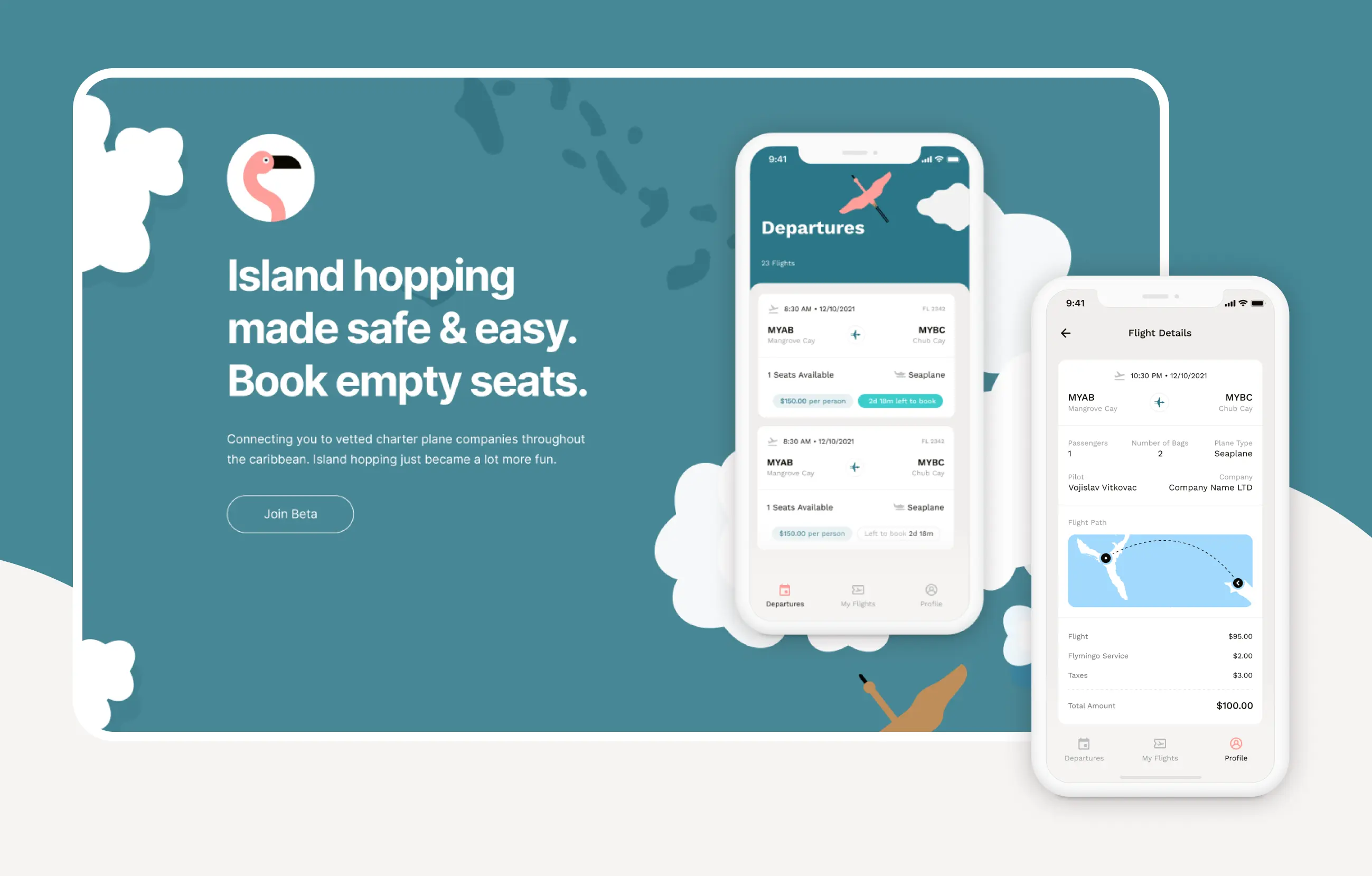
Custom Flight Booking App Development
An Uber-like app that connects charter flight pilots with travelers, making it easier to book and share the cost of flights to the Bahamas.
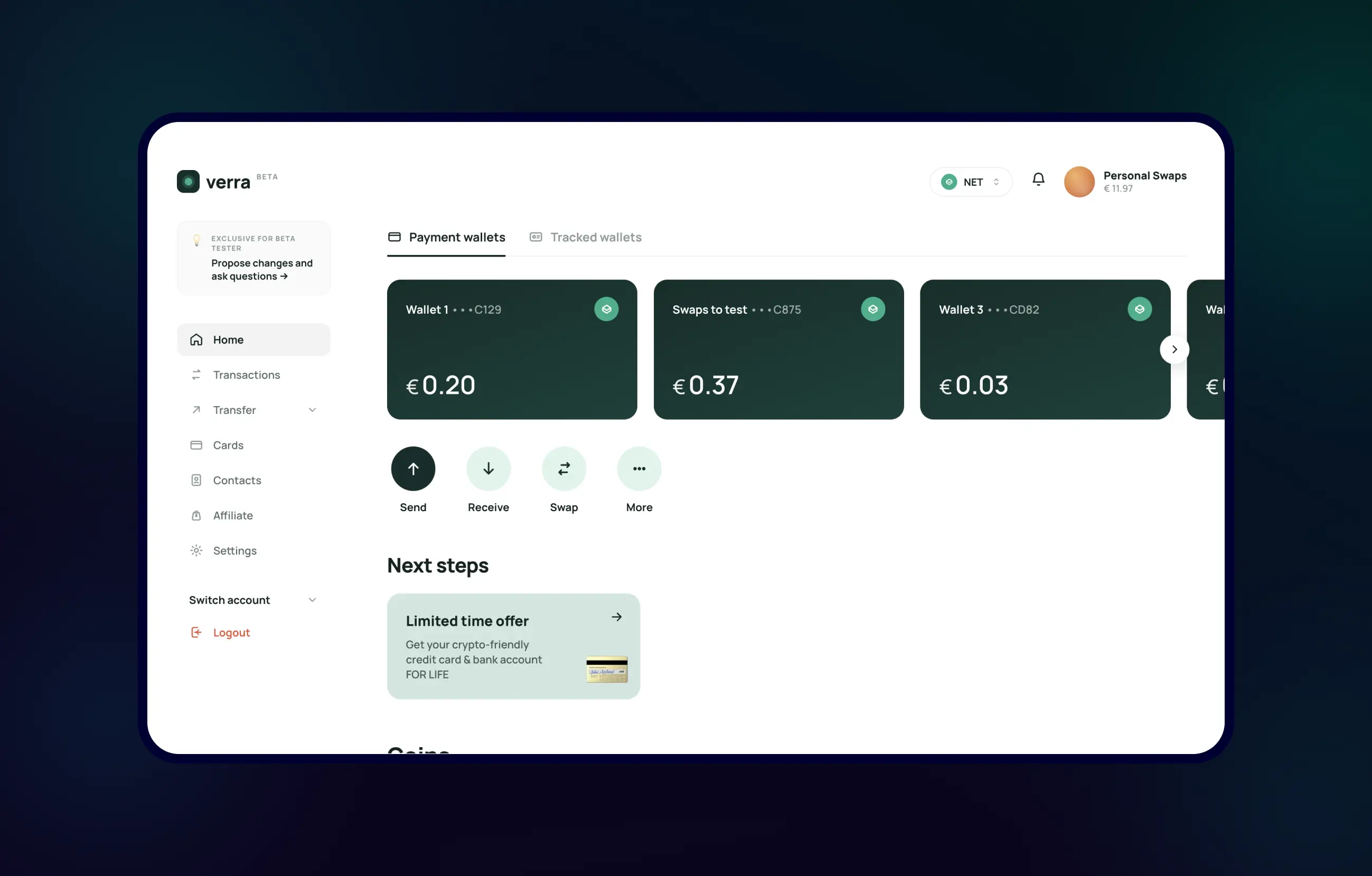
Asset Management Platform Development
A digital asset platform for managing funds and spending crypto through virtual and physical cards across personal and corporate accounts.
How to Hire TypeScript Developers from Stubbs
1
Tell Us What You Need
Share your project stack, the dev's responsibilities and the level of experience you're after. It's also useful to know how your team works and how many hours of support you're going to need.
2
Review Developer Profiles
We'll source engineers whose experience is relevant to your needs and send you their profiles. You can then go on to review their technical background and past projects prior to proceeding.
3
Interview Your Developer
Meet the candidates, ask them technical questions and have a go at working out how they'd work in the team. You can of course arrange a technical assessment if that's something your process requires.
4
Start Working Together
Once you've picked a developer we agree the terms and sort out the onboarding. Your new engineer then gets access to the tools, repos and tasks.
You can also start with a one-week trial. If the developer isn’t a good fit, we offer a refund under our trial terms.
Hire a TypeScript Developer for Your Project
Name
Ways to Work with Our TypeScript Developers
Staff Augmentation
Add one or more TypeScript developers to your existing engineering team. They work with your technical lead, they're in the meetings, they follow your dev process.
Best for: organisations who already have in-house development teams but just need a bit more headcount.
Dedicated TypeScript Developers
Hire a developer to work on your product for a set number of hours per week. That works perfectly for ongoing feature development, backend work, maintenance and long term projects.
Best for: products with a fairly standard development backlog and a requirement for ongoing engineering support.
Dedicated Development Team
Bring in a number of engineers for a larger project. Depending on the scale of the project the team can also include QA, project management and technical leadership.
Best for: Companies building a product or managing a number of development workstreams at the same time.
TypeScript Technologies Our Developers Work With
Front-end
Back-end
Mobile
Server
CMS
QA
Integrations


Why Hire TypeScript Developers from Stubbs?

1
Experience with FinTech and Web3 Products
Our engineers have worked on crypto exchanges, digital asset platforms and apps that involve payment integrations and financial data. They're very much aware of the kind of issues that can arise in a product where a calculation error, a permission error or a transaction error can be quite serious.
2
Frontend and Backend Expertise
We use TypeScript with React, Next.js, Node.js, Express.js and NestJS. You can hire a frontend engineer, a backend developer or a full stack developer who can do both.
3
Mid-Level and Senior Engineers
Our team is made up of 20+ mid and senior level specialists. We match them up on the actual work that's involved, taking into account their experience of the relevant frameworks and with similar products.
4
Direct Communication
You'll be working directly with the developers on your project. They can join your Slack channels, use your Jira board (or whatever task management tool you're using), attend your sprint planning sessions and take part in code reviews.
5
AI-Assisted Development
Our developers use tools like Cursor and GitHub Copilot to assist with coding, refactoring and testing. Any AI generated changes are reviewed prior to merge, particularly where the change is to existing business logic or financial integrations.
6
Flexible Hiring Terms
You can start with a single developer and scale the team as the project evolves. We have a one week trial and a range of different models for ongoing development.
Frequently Asked Questions
1. How much does it cost to hire a TypeScript developer?
How much does it cost to hire a TypeScript developer?
At Stubbs TypeScript developer rates start at $30/hour. The rate will vary depending on the level of experience, the technical responsibilities and the type of project.
Our typical rates are:
| Developer Level | Hourly Rate | Monthly Cost (160 hours) |
|---|---|---|
| Mid-Level TypeScript Developer | $30–35 | $4,800–5,600 |
| Senior TypeScript Developer | $35–45 | $5,600–7,200 |
| Tech Lead / Solution Architect | $40–55 | $6,400–8,800 |
For example a senior TypeScript developer on a full time basis for 3 months would be circa 16,800-21,600.
You can also engage a developer on a part-time basis if your project doesn't require a full-time developer.
The final rate is confirmed following a review of the technologies, the experience level and the responsibilities of the role.
2. What does a TypeScript developer do?
What does a TypeScript developer do?
A TypeScript developer builds and maintains apps. TypeScript is a language based on JavaScript with static typing.
The work can be very different. A frontend TypeScript dev will be building out the interfaces in React/Next.js, a backend dev will be looking after the APIs, the database and the application logic in Node.js/NestJS.
TypeScript developers also work on improving existing codebases. That's the same as converting a JavaScript project to TypeScript, writing better types, fixing errors, refactoring modules and so on. They're there to maintain the application as new features get added.
3. What skills should I look for when hiring a TypeScript developer?
What skills should I look for when hiring a TypeScript developer?
Start with the technologies that your product uses. Having TypeScript experience doesn't necessarily tell you whether someone is the right person for a React frontend, a Node.js backend or a full stack application.
For the frontend, look for React or Next.js experience, component architecture, state management and API integration.
Backend developers should know Node.js, database stuff, asynchronous code, API development and the like (Express.js, NestJS etc).
It's also worth checking how the developer actually uses TypeScript. A good engineer will know their way around generics, interfaces, utility types, strict typing and will know how to deal with third party libraries that have either no type definitions at all or very poor ones.
For the senior roles look at code review experience, architectural experience and the ability to work in a large existing codebase.
4. Should I hire a TypeScript developer or a JavaScript developer?
Should I hire a TypeScript developer or a JavaScript developer?
The majority of TypeScript developers also work with JavaScript (TypeScript is built on JavaScript and compiles to it).
For a fairly small JS project with fairly limited functionality, a JS developer would be adequate. If you're looking at a product that's already written in TypeScript, has a fairly large codebase or is going to be changing quite a bit across various modules then someone with a strong TypeScript pedigree is going to be the better choice.
TypeScript can help catch certain errors before the code even runs, particularly when you're changing data structures, API contracts or shared bits of functionality.
TypeScript doesn't in any way replace testing or runtime validation. You still need to understand the application logic and how to deal with data coming in from the outside world.
5. Can I hire a TypeScript developer for an existing project?
Can I hire a TypeScript developer for an existing project?
Yes, our developers do regularly work with apps that have already been developed by another team. They can join your current workflow, go through the codebase and start working on new features, bug fixes, integrations and refactors.
6. Can your developers migrate a JavaScript application to TypeScript?
Can your developers migrate a JavaScript application to TypeScript?
Yes, migration is one of the things our TypeScript guys can do. For an existing product you almost never need to convert all the files at once. A phased migration allows the team to keep working on features as you progressively introduce TypeScript into various parts of the app.
Developers can start with the modules that change frequently, the shared data models, the API responses, or the areas where runtime errors have been a constant problem.
They'll also need to go through the dependencies, the build config and the testing. Some of the JS libraries have incomplete type definitions so there will be some extra work required there.
7. Can I hire a TypeScript developer for both frontend and backend development?
Can I hire a TypeScript developer for both frontend and backend development?
Yes we do. We have full stack developers who work with TypeScript on both the React/Next.js frontends and the Node.js backends.
A full stack dev can go from the interface right through to the API and the database.
For instance, adding a new billing feature to a SaaS product could involve frontend forms, account permissions, backend logic, database changes and payment provider integration.
Having one developer who is familiar with both sides can make the coordination of this a lot easier.
For bigger projects though it may well be more sensible to have the front end and back end developed by separate specialists. We can help you work out what the right team structure would be.
8. How quickly can I hire a TypeScript developer?
How quickly can I hire a TypeScript developer?
The timeline will vary depending on the level of experience you're after, the tech you need and developer availability.
We start off by looking at your requirements and identifying some suitable engineers. You then get to go through their profiles and interview them prior to making your selection.
A role that's based on a common stack (React, Next.js and TypeScript for instance) is going to be a lot easier to fill than one that's specifically around a particular financial system or a very complex backend.
Once the developer has been selected and the agreement is in place we then arrange onboarding with your team.
9. Can I hire a TypeScript developer part-time?
Can I hire a TypeScript developer part-time?
Yes you can hire a TypeScript developer for a set number of hours rather than going down the route of a full time developer.
Part time co-op can be very effective for maintenance, code refactoring, smaller integrations and the like where your in house team are doing the bulk of the work.
10. Do your TypeScript developers have experience with FinTech and Web3?
Do your TypeScript developers have experience with FinTech and Web3?
Yes, FinTech and Web3 are definitely among our areas of expertise.
Our dev team have been working on the financial dashboards, the crypto trading interfaces, the wallets, the payments and the digital assets.
MuesliSwap uses React and TypeScript for its DEX interface. Another platform (an asset management platform) is a mix of TypeScript, React, NestJS, Express.js and MongoDB.
This is useful for companies that work with financial data, have a number of third party providers or have quite complex user permission sets.
11. Do you offer a trial period before hiring a developer long-term?
Do you offer a trial period before hiring a developer long-term?
Yes. Stubbs do offer a one week trial for developers that we've hired via our staff augmentation service.
During that time you can see how the engineer is working with your codebase, communicating with the team and dealing with the tasks that have been assigned.
If it doesn't meet your requirements we'll give you a refund in accordance with the trial terms.
The trial is an opportunity to assess the working relationship prior to embarking on a longer term engagement.
12. What’s the difference between hiring a dedicated TypeScript developer and outsourcing a TypeScript project?
What’s the difference between hiring a dedicated TypeScript developer and outsourcing a TypeScript project?
When you employ a dedicated TypeScript developer that developer joins your team and typically reports to your tech lead or project manager.
You decide what features to prioritise, manage the backlog and review the work.
With project outsourcing you're essentially handing over a defined scope to an external development team. The provider then takes on the greater responsibility for the planning, development, testing and delivery.
13. How do your TypeScript developers communicate with clients?
How do your TypeScript developers communicate with clients?
Our developers work directly with the client via the tools that the client's own teams are already using. This could be Slack for communication, Jira or some such for planning and GitHub/Bitbucket for code reviews.
Engineers can join the standups, the sprint planning, the technical stuff and the regular progress meetings.
For international projects we agree on working hours and meeting overlap prior to the engagement commencing. Our team are remote in Ukraine and can work with teams based in Europe and the US.
14. Can I hire more than one TypeScript developer?
Can I hire more than one TypeScript developer?
Yes you can add several TypeScript developers to your team or indeed go down the route of hiring a dedicated development team.
For instance you may need one React dev and one Node.js dev to do the various bits of a SaaS app.
Larger teams can of course also incorporate QA engineers, project managers and technical leads.
The team structure depends on the work involved. We can start with a smaller group and discuss additional specialists as the product develops.
We would love to help.
What are you interested in:
Name
Tell us about your project and goals
0/1000
Add your file
