View all
Web DevelopmentMobile Development UX/UI DesignStaff Augmentation CTO as a ServiceDedicated TeamLow-Code DevelopmentTypeScript Development Company
Build web, backend, and mobile products with an experienced TypeScript development company. Our TypeScript development services cover new applications, JavaScript migration, codebase modernization, and ongoing engineering support.
TypeScript Development Services We Provide
Custom TypeScript Software Development
Custom web and software applications built around the product’s functionality, users, integrations, and plans for further growth.
TypeScript Support and Maintenance
Bug fixes, dependency updates, monitoring, performance improvements, and further development for existing TypeScript applications.
Product Scaling with TypeScript
Architecture improvements, new functionality, and performance optimization for products that need to support more users, data, or integrations.
JavaScript-to-TypeScript Migration
Gradual migration from JavaScript to TypeScript without rebuilding the entire application or pausing ongoing product development.
TypeScript Framework Integration
TypeScript implementation with React, Next.js, Node.js, Express.js, NestJS, and other tools already used within the product.
TypeScript Consulting Services
Technical guidance on architecture, framework selection, migration planning, code quality, testing, and application scaling.
TypeScript Code Audit and Refactoring
A detailed review of the codebase to identify weak typing, outdated dependencies, duplicated logic, technical debt, and areas that are difficult to maintain.
API Development with TypeScript
REST and GraphQL APIs built with Node.js, Express.js, or NestJS, including authentication, validation, integrations, and documentation.
Frontend Development with TypeScript
Typed React and Next.js interfaces for products with complex data, reusable components, multiple user flows, and API integrations.
Backend Development with TypeScript
Backend systems built with Node.js, Express.js, and NestJS for business logic, databases, integrations, background processes, and user management.
Projects Delivered by Our Team

Dex Platform Development
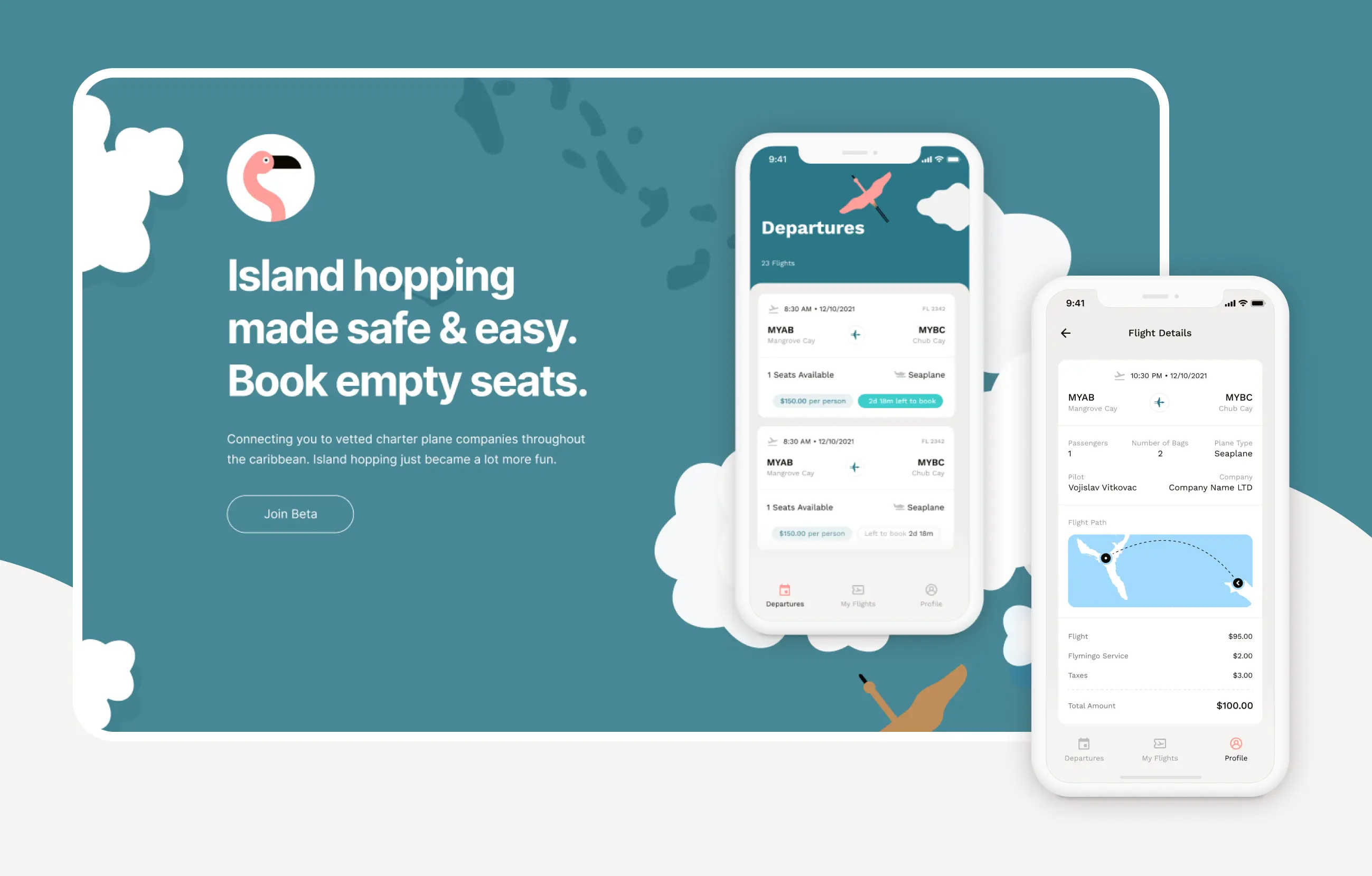
Custom Flight Booking App Development
An Uber-like app that connects charter flight pilots with travelers, making it easier to book and share the cost of flights to the Bahamas.
-1747136709263.webp)
Fitness & Weight Tracking Platform Development with Smart Predictions
A smart weight tracking platform that combines progress visualization, goal tracking, and predictive insights.

Digital Identity Verification Platform
A mobile-first web platform that helps companies verify employee identities and create ID photos remotely.
What We Build with TypeScript
SaaS Platforms
Web applications that include subscription management, multi-tenant features, user roles, dashboards, integrations, notifications, and admin systems.
FinTech Applications
Our team creates financial dashboards, transaction workflows, digital asset products, payment integrations, client verification, reporting tools, and back-office platforms.
Marketplaces
Products connecting customers and providers through listings, orders or bookings, payments, search, reviews, messaging, notifications, and management tools.
Web Applications
Frontend, backend, and full-stack products using React, Next.js, Node.js, Express.js, and NestJS.
Cross-Platform Mobile Applications
React Native and Expo apps for iOS and Android, with TypeScript backend services and integrations as needed.
Internal Business Systems
Administrative platforms, reporting tools, workflow automation, dashboards, data management systems, and integration layers that connect with your existing business software.
Work with a TypeScript development company with 6+ years of production experience
Why Use TypeScript for Web and Software Development?
1
Catch Problems Earlier
TypeScript flags many common mistakes as developers write code. For example, it can show when a function receives the wrong type of data or when an expected field is missing. It does not replace testing, but it helps resolve these issues before they become production bugs.
2
Safer Refactoring
When requirements change, developers can quickly see which parts of the code rely on what they are updating. This makes it easier to plan major changes and helps prevent missing anything important.
3
Easier Maintenance of Large Codebases
Clear types and interfaces help developers understand code they haven’t worked on before. This becomes even more useful as the app, team, and integrations grow.
4
Clearer Application Contracts
Typed data structures help different parts of your app work together as expected. Adding runtime checks can also prevent issues when connecting the frontend, backend, or external services.
5
Better Development Tooling
TypeScript gives developers more accurate autocomplete, clearer code hints, and easier navigation between files and functions. This makes it faster to understand an existing codebase, trace how different parts are connected, and update features without searching through the project manually.
6
Gradual Adoption
You can add TypeScript to a JavaScript app gradually, step by step. You don’t have to rewrite everything to start seeing the benefits.
Tech Stack We Use
Front-end
Back-end
Mobile
Deployment
CMS
QA
Integrations

-1747731627136.webp)
-1749023935755.webp)


-1747731983305.webp)

-1747732042514.webp)

-1747732097673.webp)

-1747732122263.webp)

-1747732160762.webp)

-1747732191631.webp)
Stages of work
TypeScript Software Outsourcing Models
Full-Cycle TypeScript Development
A full team handles everything from planning and architecture to development, testing, deployment, and ongoing improvements. This approach works well for companies that prefer a single partner to manage delivery instead of working with multiple contractors.
Dedicated TypeScript Team
A dedicated team supports your product roadmap and fits into your communication tools, development processes, and internal teams. Depending on your needs, the team can include frontend, backend, full-stack, QA, DevOps, project managers, and designers.
TypeScript Team Augmentation
You can add one or more TypeScript specialists to your current engineering team. They will follow your existing architecture, sprint process, tools, and technical standards.
Migration and Modernization Team
Bring in a focused team to migrate a JavaScript application, refactor an existing TypeScript codebase, improve testing, or reduce technical debt without transferring full product ownership.
Ongoing Product Support
You can continue working with TypeScript engineers for maintenance, new features, updates, integrations, and performance improvements after your main release.
Team
Build or Improve Your TypeScript Product
Build, migrate, or scale your TypeScript application with an experienced development team.
Name
Why Choose Our TypeScript Development Company?
-1747832696851.png)
1
Skilled and Experienced Team
Our team consists of mid-level and senior engineers with years of hands-on experience. They’ve completed over 100+ projects and confidently carry out tasks of any complexity.
2
SaaS, FinTech, and Marketplace Experience
We have built products with user roles, subscriptions, payments, financial workflows, external integrations, real-time features, dashboards, and admin systems.
3
Flexible Cooperation Models
Start a project with a complete development team, extend your current engineering capacity, or use ongoing TypeScript support when you need it.
4
Efficient Development with AI-assisted Workflows
We use AI tools and the latest technologies to make our work more efficient and speed up development. This helps us deliver results quickly while still maintaining high quality.
5
Code Quality, Security and Best Practices
We follow strict coding standards, run reviews and apply secure development practices.
FAQs
1. What does a TypeScript development company do?
What does a TypeScript development company do?
A TypeScript development company builds, updates, and supports apps that use TypeScript for frontend, backend, or mobile projects.
This work might cover product architecture, React or Next.js development, Node.js APIs, database setup, moving from JavaScript to TypeScript, code reviews, automated testing, cloud deployment, and ongoing support. The team can build your whole product or join your current engineering group for a specific project.
2. What do TypeScript development services include?
What do TypeScript development services include?
TypeScript development services can include custom web and mobile applications, frontend development, backend and API development, full-stack engineering, migration from JavaScript, code modernization, automated testing, consulting, deployment, and maintenance.
For an existing product, the scope may also include dependency updates, technical debt reduction, architecture improvements, typing strategy, test coverage, and ongoing feature development.
3. Why choose TypeScript for web development?
Why choose TypeScript for web development?
TypeScript is a good choice for web products that are expected to grow. It helps developers catch type-related mistakes before release and makes larger codebases easier to understand and update.
This is useful when an application has many screens, user roles, integrations, or several developers working on it at the same time. The main benefit of TypeScript web development is not faster runtime performance, but fewer problems during development and safer changes as the product evolves.
Testing and runtime validation are still needed, but TypeScript makes day-to-day development more predictable.
4. What is the difference between TypeScript and JavaScript?
What is the difference between TypeScript and JavaScript?
JavaScript is the language that runs in browsers and Node.js. TypeScript adds optional types and development-time checks on top of JavaScript, then compiles back into JavaScript before the application runs.
In practice, TypeScript can warn developers about missing fields, incorrect data formats, or invalid function calls before the code is released. JavaScript may be enough for a small or simple project, while TypeScript is usually easier to manage when the codebase and team start growing.
TypeScript does not make an application faster by itself and cannot prevent every runtime error.
5. Can TypeScript be used for both frontend and backend development?
Can TypeScript be used for both frontend and backend development?
Yes. TypeScript works with frontend frameworks such as React and Next.js and backend technologies such as Node.js, Express.js, and NestJS.
Using TypeScript throughout your app can make your engineering process more consistent and your data contracts clearer. Still, frontend and backend code should stay separate, and you should always check external data at runtime instead of relying only on TypeScript types.
6. Can you migrate an existing JavaScript application to TypeScript?
Can you migrate an existing JavaScript application to TypeScript?
Yes. We usually start by reviewing your codebase and then create a step-by-step migration plan based on risks, dependencies, test coverage, and your current priorities.
JavaScript and TypeScript can work together during the switch. This lets the team move important modules first, write new features in TypeScript, and update the rest of the code over time instead of rebuilding everything at once.
7. Can migration continue without stopping feature development?
Can migration continue without stopping feature development?
Usually, yes. With good planning, you can migrate one module at a time while still updating your product.
The migration plan should cover module dependencies, build setup, tests, and any parts with little documentation. While we can’t always promise zero interruptions in older systems, moving step by step usually avoids a full development freeze.
8. How much does TypeScript development cost?
How much does TypeScript development cost?
The cost depends on your project’s size and needs. A focused frontend or backend module, an initial migration, or a small TypeScript project usually starts at $8,000 to $15,000.
An MVP or full-stack web app with authentication, database integration, and several external services usually costs $15,000 to $35,000. More complex SaaS, marketplace, or fintech products with many user roles, integrations, mobile apps, and custom infrastructure can range from $35,000 to $80,000 or more.
The final price depends on your current codebase, features, integrations, architecture, testing, security, and deployment needs.
9. How long does a TypeScript project take?
How long does a TypeScript project take?
A focused module, API, or migration phase may take approximately 3–6 weeks. An MVP with frontend, backend, authentication, and core integrations commonly requires around 6–12 weeks.
More complex products can take 3–6 months or longer, depending on the number of features, applications, user roles, integrations, and infrastructure requirements. We deliver a more accurate timeline after reviewing the scope and technical state of the product.
10. Which frameworks do you use with TypeScript?
Which frameworks do you use with TypeScript?
Our main TypeScript stack includes React, Next.js, Node.js, Express.js, NestJS, React Native, and Expo.
The supporting stack may include PostgreSQL, MongoDB, Redis, Prisma, REST, GraphQL, WebSockets, Jest, Playwright, Docker, AWS, Vercel, and GitHub Actions. Framework selection depends on the product rather than using the same setup for every project.
11. Is TypeScript suitable for enterprise projects and large codebases?
Is TypeScript suitable for enterprise projects and large codebases?
Yes. Using clear types, interfaces, and module boundaries helps make big applications easier to understand, test, and update.
But TypeScript by itself doesn’t make a system ready for enterprise use. Big products still need good architecture, automated tests, runtime checks, monitoring, documentation, dependency management, secure access, and reliable deployment processes.
12. How do you ensure code quality in TypeScript projects?
How do you ensure code quality in TypeScript projects?
We combine TypeScript type checking with code reviews, linting, automated testing, runtime validation, and CI/CD quality checks.
The exact approach depends on the product. A financial workflow, authentication system, or payment integration requires different coverage from a non-critical internal interface. We focus testing and review effort on areas where defects would have the greatest impact rather than applying the same checklist to every module.
13. How do you handle testing, CI/CD, and security?
How do you handle testing, CI/CD, and security?
We use different types of testing, such as unit, integration, end-to-end, and manual QA. Our CI/CD pipelines check everything before deployment and help keep builds consistent in every environment.
Security tasks include things like authentication, authorization, input validation, checking dependencies, managing secrets, setting up systems securely, and reviewing code. TypeScript is helpful during development, but strong security practices are still necessary.
14. Can you audit and refactor an existing TypeScript codebase?
Can you audit and refactor an existing TypeScript codebase?
Yes, we can. An audit reviews your architecture, how you use types, dependencies, test coverage, repeated code, API design, state management, database access, performance, security, and deployment.
We rarely recommend starting over with a full rewrite. After the audit, we give you a prioritized roadmap that highlights which issues affect stability, maintenance, or future growth, and which fixes you can tackle step by step.
15. What TypeScript software outsourcing models do you offer?
What TypeScript software outsourcing models do you offer?
We offer full-cycle development, dedicated TypeScript teams, team augmentation, migration and modernization help, and ongoing support. The best approach depends on whether you want us to handle everything, need specialists for your team, or have a specific technical challenge to solve.
16. Do you provide post-launch TypeScript support and maintenance?
Do you provide post-launch TypeScript support and maintenance?
Yes. Support can cover bug fixes, dependency updates, monitoring, performance improvements, refactoring, new feature additions, integrations, automated testing, and infrastructure work.
We can provide ongoing product development or extra engineering help for companies with their own teams.
We would love to help.
What are you interested in:
Name
Tell us about your project and goals
0/1000
Add your file
