AI Integration Services
Our AI Integration Services
LLM & API Integration
Integrating LLMs into existing apps via APIs (text generation, summarisation, classification, chat etc).
Generative AI Integration
Adding text and image generation, editing tools and other generative AI capabilities to web and mobile products.
AI Chatbot Integration
Connect AI chatbots to websites, customer portals and internal applications with access to the relevant business data and knowledge bases.
RAG & Knowledge Base Integration
Linking language models to company documents, databases and internal knowledge bases to produce answers that are derived from the information available.
AI Agent Integration
Integrating AI agents with business tools, internal APIs and application workflows. The agents can retrieve information and perform permitted actions within the connected systems.
AI Workflow Integration
Add AI powered processing to the existing workflow (document classification, data extraction, request handling, updates between apps etc).
Document & Voice AI Integration
Integrating OCR, speech recognition and language processing to extract structured information from documents, images and voice.
AI Integration Maintenance
Updating the model integrations, looking at the API issues, improving the quality of the responses and managing the change as the various AI providers keep releasing new models and services.
AI Integration Projects
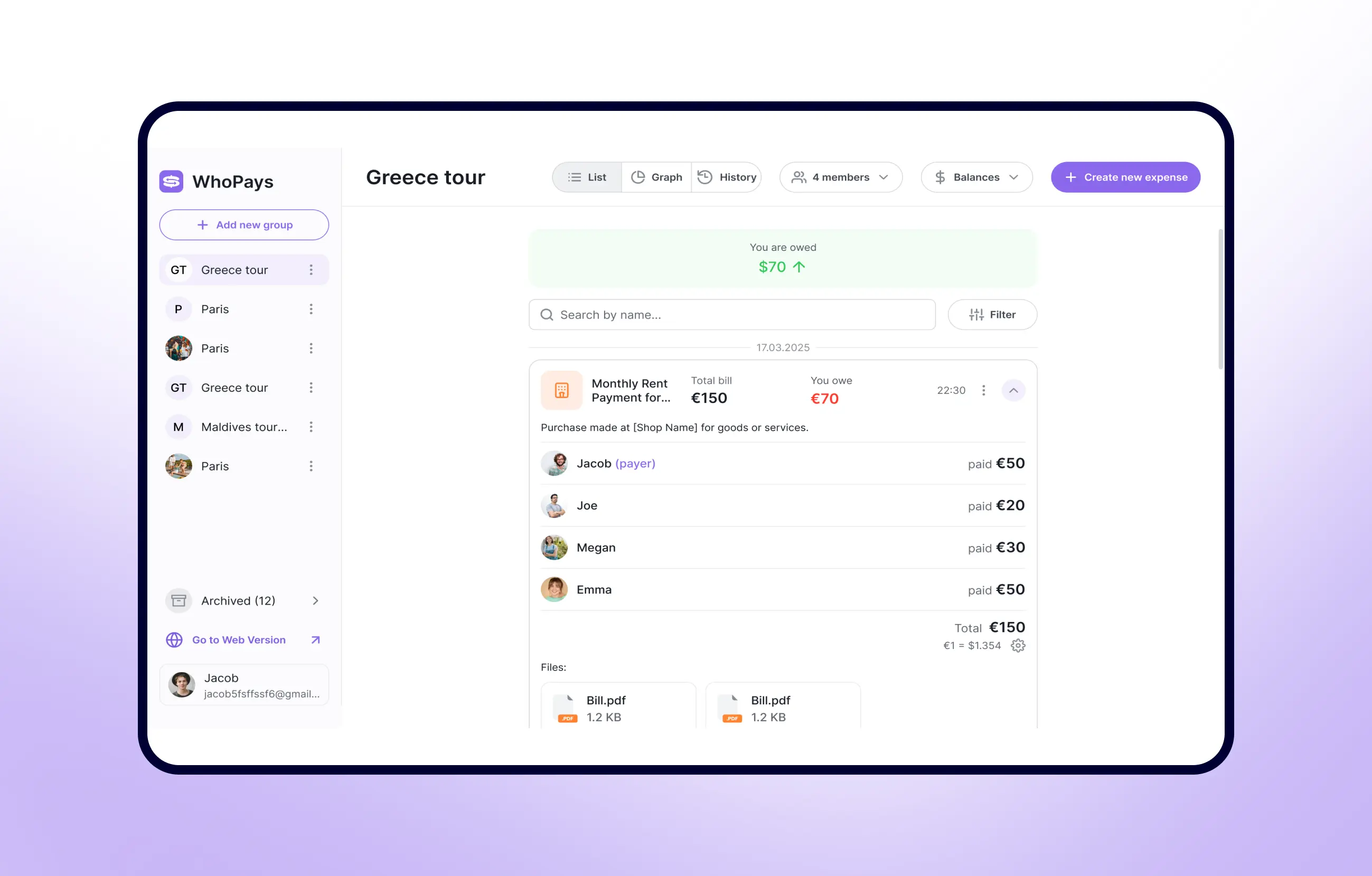
Personal Finance App Development
A personal finance app that helps groups split expenses, track balances, and settle payments without manual calculations.
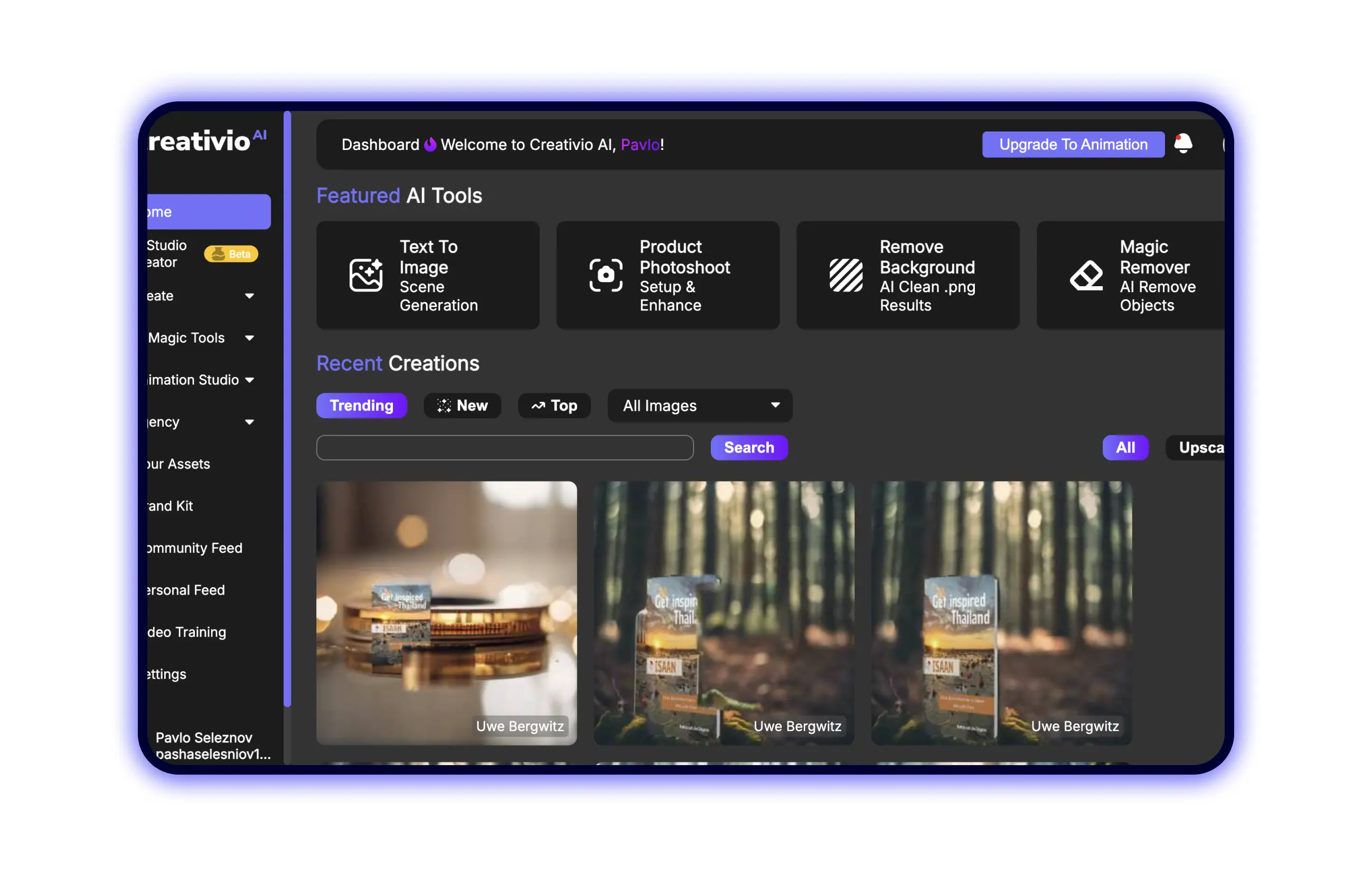
AI SaaS Development
A SaaS platform that uses AI to generate product photography, edit images, remove backgrounds, and improve visual quality.
AI Integration Solutions for Existing Applications
AI for SaaS Applications
Add AI search, content generation, document analysis or an in-app assistant to your SaaS product. We integrate these capabilities into existing accounts, subscriptions, permissions and application data.
AI for FinTech
Integrate AI for expense categorisation, receipt scanning, financial document processing and support assistants. All financial calculations and transaction execution will continue to be governed by the application's existing business rules and controls.
AI for E-commerce
Introduce AI into image editing, product content generation, catalog data processing and customer assistance within existing e-commerce platforms.
AI for Internal Business Tools
Connect AI to dashboards, internal databases and business apps to enable staff to find information, produce reports, classify requests and process documents.
AI for Healthcare Applications
Add in administrative AI features (document handling, appointment support, information lookup etc) to the healthcare platforms with appropriate controls around sensitive data.
Our AI Integration Process
1. Reviewing Your Application
We start by looking at the existing software, its architecture, data sources and the functionality you want to introduce. This helps us understand which parts of the application need changes and which can remain as they are.
2. Choosing the Integration Approach
Next we pick the models/services that are appropriate for the job and work out how they're going to talk to your app. If the results we're expecting are in any doubt we can run a small proof of concept to test the approach.
3. Development & Integration
Our devs connect up the AI services, implement the required back end logic and the required front end functionality. This also involves dealing with API errors, access controls and data processing.
4. Testing & Deployment
Prior to release we test the integration with the relevant inputs and expected outputs. Once it's live we can then monitor model usage, look at any issues that arise and tweak the implementation as the feature actually performs.
Why Choose Stubbs for AI Integration?

1
Experience with Existing Software
We've worked on applications at various stages of development, including ones that were started by other teams. Our developers can take an existing codebase and add functionality to it without having to re-invent the wheel and re-build anything that's already working.
2
AI and Full-Stack Development
Connecting an AI model is often only the beginning. We also build the APIs, the databases, the frontend interfaces and the backend with React, Next.js, Node.js and TypeScript.
3
FinTech & SaaS Expertise
We've delivered financial platforms, SaaS apps, digital wallets and all sorts of products that have required complex third party integrations. That experience is useful when you're looking at an AI that needs to be able to access existing business data, user permissions and financial workflows.
4
100+ Projects Delivered
Stubbs have been building software since 2019. The team is made up of 20+ mid and senior level specialists across web, mobile, backend and AI.
5
Flexible Cooperation
We can do a defined AI integration project or provide developers to work with your existing team. Project based development, staff augmentation and dedicated teams are all options.
Frequently Asked Questions
1. What are AI integration services?
What are AI integration services?
AI integration services are about taking existing software and adding AI capabilities to it. This can be as simple as connecting a language model via an API, adding an AI assistant, having the software process documents, or implementing some form of automated workflow.
For example a SaaS app might use AI to do a summary of customer data or to search internal docs. That integration would need to work against the product's existing backend, databases, user accounts and permissions.
2. How much does AI integration cost?
How much does AI integration cost?
Cost will be driven by the AI functionality, the existing app architecture, the data requirements and the number of integrations.
At Stubbs a fairly focused AI PoC will generally be in the 3k-10k planning budget. A production integration could easily require more work if it's going to be across a number of systems, have a number of custom interfaces or involve sensitive data.
We also take into account the cost of the model API, hosting and maintenance (all of which are generally separate from the cost of development).
3. How long does AI integration take?
How long does AI integration take?
A fairly straightforward AI API integration can take a few weeks' work, particularly if you already have a backend in place and the requirements are well defined.
More complex projects obviously take longer. An example would be integrating an AI assistant with a number of databases, a number of internal APIs and various user permission levels which would all require additional dev and testing.
The timeline will also be dictated by the quality of the data available and whether the AI feature needs to be tested prior to full go-live.
4. Can you integrate AI into an existing application without rebuilding it?
Can you integrate AI into an existing application without rebuilding it?
Yes. In most cases adding AI doesn't require you to replace the whole application.
Our dev team look at the current architecture and work out where the AI bits need to be plugged in. Some of the integrations can be as simple as a separate backend service, others will require changes to the existing APIs, databases and/or frontend.
The extent of the modification will depend upon how the original software was developed and what information the AI feature requires access to.
5. Can you integrate ChatGPT or other LLMs into our software?
Can you integrate ChatGPT or other LLMs into our software?
Yes, we can integrate the language models via APIs to support a range of features including text generation, summarisation, document processing and AI assistants.
The app makes a request to the model, processes the response and either presents it to the user or passes it on to some other part of the system.
An integration may also be required to have authentication, request validation, usage tracking and access to existing app data. We look at all of those requirements prior to development.
6. What is the difference between AI development and AI integration?
What is the difference between AI development and AI integration?
AI development is a wider service which can be the development of an entire AI product (complete with frontend, backend, user management and infrastructure).
AI integration focuses on introducing AI functionality into an existing system. For example an AI development project would be the creation of a new SaaS application around AI document processing. An AI integration project would be the addition of document extraction to an existing SaaS platform. They can be very much the same technology but the scope of development is very different.
7. Do we need to train a custom AI model?
Do we need to train a custom AI model?
Typically not. A lot of the common features can be implemented via the existing AI models via their APIs. For text generation, document summarisation, image processing and conversational assistants, commercially available models will likely already have the required functionality.
Before we'd even consider custom training or fine-tuning we'd test whether one of the existing models was capable of doing the job. In a number of cases it would be as simple as improving the quality of the input data, the prompts or the retrieval.
8. Can AI work with our existing databases and internal documents?
Can AI work with our existing databases and internal documents?
Yes, as long as the application has the appropriate access to that information. For structured data an integration can pull the relevant records via existing APIs or database queries. For documents and knowledge bases a RAG system can retrieve the relevant information and hand it to the LLM when answering a question.
We also have access permissions to consider. An AI assistant shouldn't be able to pull confidential records simply because they're in the same database.
9. Can you integrate AI with legacy software?
Can you integrate AI with legacy software?
Yes, the technical approach will be dependent on the application architecture.
The older systems won't have the APIs and data structures that are required for AI integration so you'd potentially need to build an additional service or integration layer.
We go through the codebase, the available interfaces and the data access prior to making any recommendations. If the existing components can continue to work then there's absolutely no point in replacing them just to introduce some AI.
10. How do you handle data security during AI integration?
How do you handle data security during AI integration?
We first establish what data the AI service needs in order to process it and how that data will be transferred, stored and accessed.
Common ones are authentication, access controls, secure API communication and restrictions on the data that is shared with the third party AI providers.
For financial applications the requirements may also include GDPR, KYC/AML, PCI DSS and controls related to ISO 27001 and SOC 2. The relevant obligations will need to be assessed on a product by product basis.
11. How do you test an AI integration?
How do you test an AI integration?
We test both the connection to the AI service and the quality of the results it produces.
For example document extraction can be assessed against sample documents which have known values. An AI assistant can be tested with questions which have known answers, including instances where the information is missing.
We also check how the app deals with API failures, incomplete responses, wrong inputs and permission restrictions. That helps us spot any issues before users actually start to rely on the feature.
12. What is the difference between AI integration and AI automation?
What is the difference between AI integration and AI automation?
AI integration is the process of connecting AI capabilities to existing software. AI automation is the use of those capabilities as part of a process that performs tasks with only a minimal amount of manual intervention.
For example, adding an AI model that classifies customer requests is an integration. Automatically routing those requests to the correct department based on the classification is an automation workflow.
The two frequently work in tandem, though of course not every integration requires automation. Some of the features are there to assist the user rather than to carry out an action on their own.
13. Do you provide support after AI integration?
Do you provide support after AI integration?
Yes. Our developers can maintain the AI integrations post deployment (i.e. API updates, bug fixes, performance improvements, changes to the existing functionality etc).
AI providers are constantly updating their models and pricing so an integration could well need updating even if the main application itself hasn't changed.
We can also have a look at model usage, response times and output quality to identify opportunities to improve performance and/or reduce operating costs.
We would love to help.
What are you interested in:
Name
Tell us about your project and goals
0/1000
Add your file
